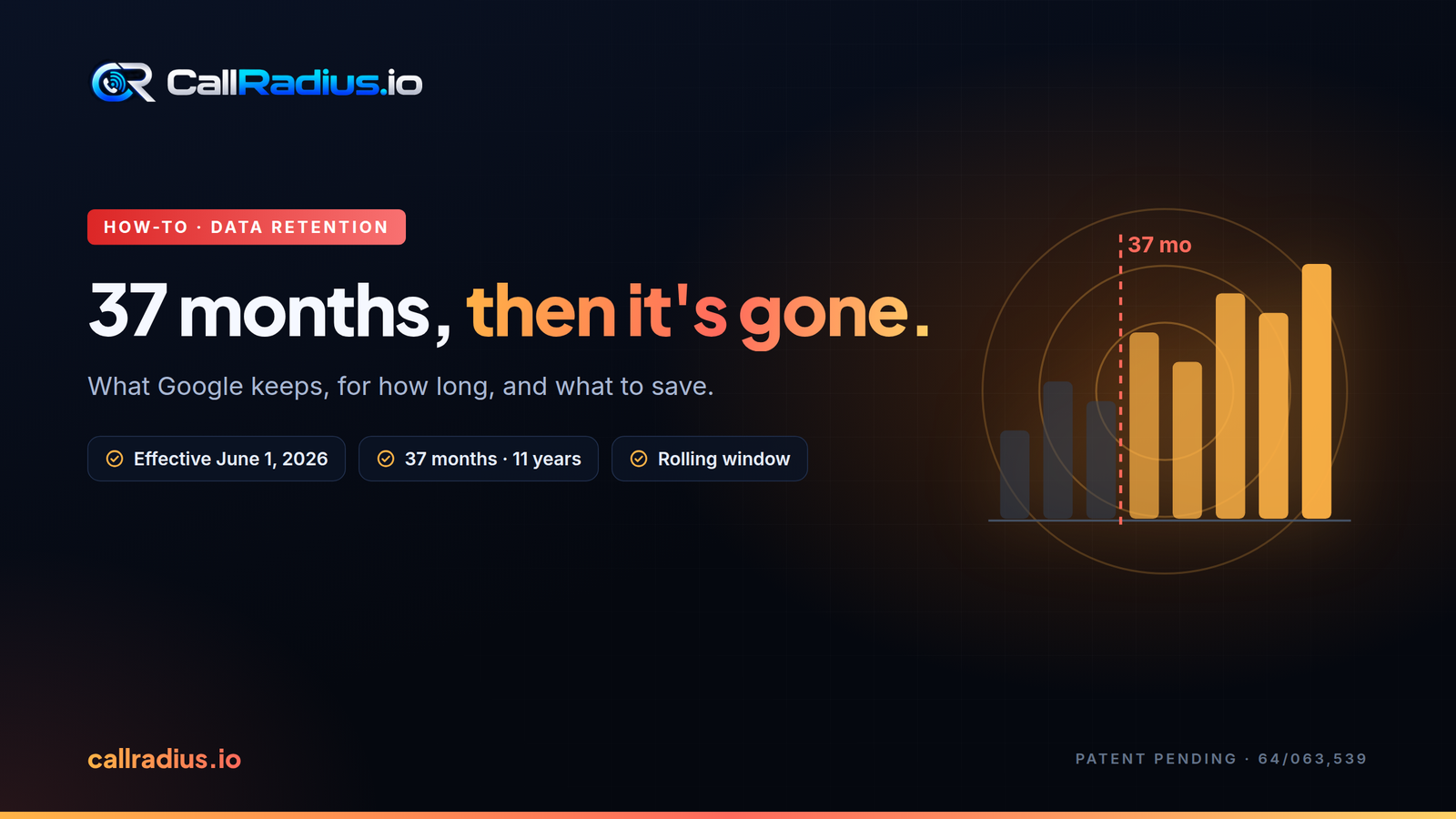
Google's advertising data retention policy changed on June 1, 2026. Detailed data now has an expiry date that moves forward every month. Here's how it works.
At a glance
- Hourly, daily and weekly data: available for 37 months (Google).
- Monthly, quarterly and annual data: available for 11 years.
- Reach and frequency metrics: 3 years.
- After that, Google says the data "will not be accessible via the Google Ads interface or APIs."
What it means in practice
| Question you want to answer | Detail you need | Kept for |
|---|---|---|
| Which weekdays bring bookable leads? | Daily | 37 months |
| Did the budget change on the 14th help? | Daily, before and after | 37 months |
| Is this August normal for us? | Weekly, several years back | 37 months |
| How did this year compare with last year overall? | Monthly | 11 years |
- Export daily and weekly data nowfor the full period Google still serves.
- Set a monthly reminderto export the newest month, so your own record keeps up.
- Keep outcomes alongsidewhich leads booked and what they were worth; Google never had that.
How CallRadius handles this
CallRadius keeps a continuous record of each managed account's daily performance and leads, and CallRadius Signal does the same, read-only, for self-managed advertisers. Neither can recover data Google has already deleted, so the earlier a record starts, the more it holds.
Frequently asked questions
How long does Google keep Google Ads data?
Since June 1, 2026: hourly, daily and weekly data for 37 months; monthly, quarterly and annual data for 11 years; reach and frequency metrics for 3 years.